

What is engineered flooring actually made of?
June 5, 2026
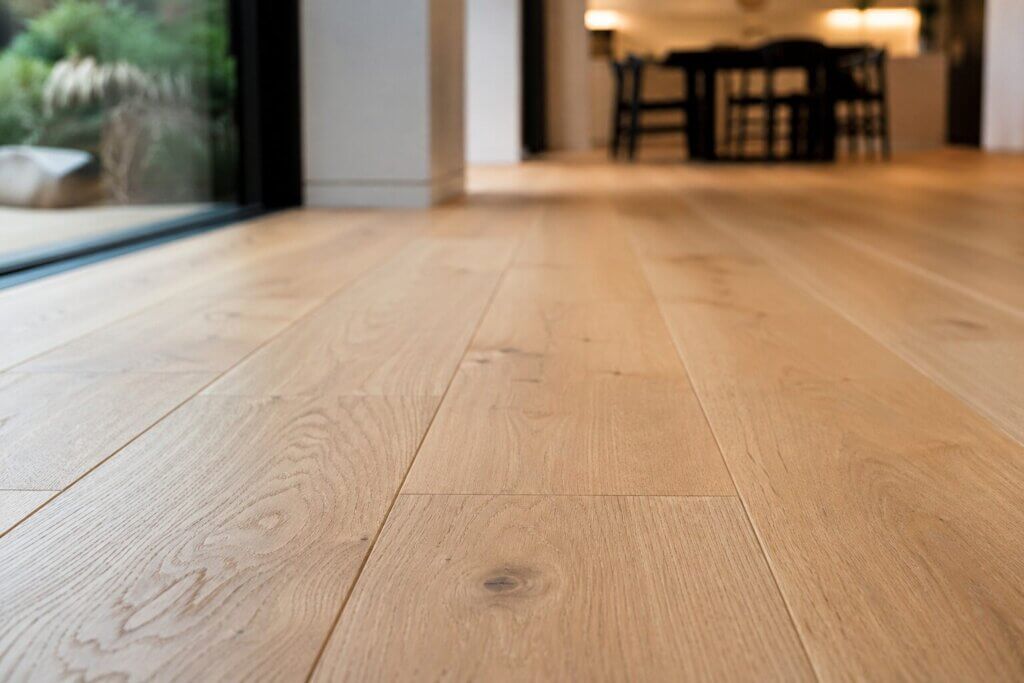
Ask someone what their engineered floor is made of. Most people will describe the top layer. The species, the colour, the finish. They may tell you it feels solid underfoot and looks just like real wood.
They are right. It is real wood. But underneath that top layer sits the core. And this is the bit that does the hard work. In most engineered floors, that core is imported plywood or for lower cost engineered floors, strips of solid softwood.
This may seem like a niche subject but it is worth understanding before you commit to a floor because it will directly affect the performance of your floor. It will also explain why two similar looking products are distinctly different prices. Plus, you may be inadvertently buying wood from places that you would not knowingly choose.
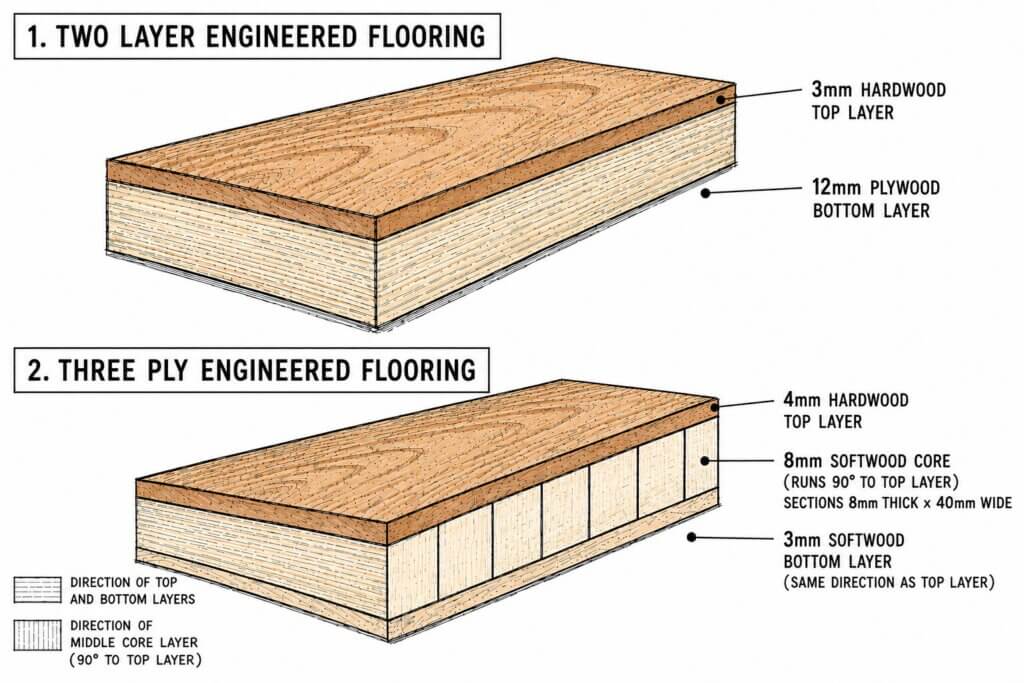
Engineered flooring is normally made in one of two ways.
The most common construction is a real hardwood wear layer, typically between 3mm and 6mm thick glued to a sheet of plywood. The price of the floor tends to reflect the quality of the plywood.
Increasingly manufacturers have switched to a Three Ply structure which does not include plywood. As the name suggests this construction consists of three layers. A top hardwood wear layer. A crossways layer of solid softwood and a lengthways back layer of softwood.
The core is the structural heart of the floor. It carries the load, resists movement and determines how stable the board will be over time. It is also the part of the floor that is rarely talked about and often misunderstood.
Not all plywood is equal
Plywood is not a single material. It is a category. And within that category, quality varies enormously.
The highest quality plywood for engineered flooring is Baltic birch, historically sourced from northern Russia. Dense, stable and consistent. For decades, it was the default core for premium engineered floors. That sourcing is now largely off the table for ethical and legal reasons.
Ukrainian and Latvian birch plywood has moved into the space, although there is much less availability. Some of it carries FSC certification. That is a positive signal, but FSC auditing depends on site visits, and independent verification of sustainable forestry practices in an active conflict zone is difficult to guarantee. This is not a political statement. It is a practical one.
Chinese plywood is widely used in lower-cost engineered flooring. Eucalyptus is the most common species. It is a cheaper product with fewer layers, but it is softer, less stable and more prone to moisture absorption than birch. It is also harder to trace back to a known, verified forest source.
Poplar plywood sits in the middle, often used as a compromise on price. It performs better than eucalyptus but is still considerably softer and less stable than good birch ply.
Does the core actually matter?
In our research, we kept hearing the same thing from sales people; the core does not really matter. Focus on the top layer. That is what you see and feel.
We disagree. Strongly.
One of the main reasons people choose engineered flooring is because it is more stable than solid hardwood. Stability is the job of the core. A lower quality core means less stability and consequently a poorer performing floor.
Engineered flooring is a structural product. You walk on it every day. It carries furniture, foot traffic and the stresses of a changing indoor climate. The core determines how well it performs under that load over 20 or 30 years. A weaker, less stable core means more movement, more risk of delamination and a shorter working life.
Ask yourself: if you were buying a car, would you only care about the paint?

Questions worth asking your supplier
Whether you are a homeowner choosing a floor for a renovation or an architect specifying materials for a client, these are the questions that matter:
- What is the core made of?
- How will it respond to changes in temperature and humidity?
- What species of plywood is used in the core?
- Where does that plywood come from?
- Is the whole product certified, or just the top layer?
If a supplier cannot answer these questions, that tells you something.
The floor beneath the floor
Engineered flooring is a great product. But it is only as good as its weakest layer.
Knowing what your floor is made of is not a technical obsession. It is basic due diligence. The same care you would give to insulation, roofing materials or anything else that goes into a building and is expected to stay there for decades.
If you have questions about what a specific floor is made of, or you want to understand the difference between plywood types and what that means for performance, our team is happy to talk it through. We have been working with timber for four generations. This is the kind of conversation we like.
(Images used in this article have been generated using artificial intelligence and are for illustrative purposes only.)