
How thermal modification turns British timber into Brimstone
June 5, 2026
Most people in the construction industry have heard of thermally modified timber. Fewer people know what it actually is or how it is made. Fewer still know that hemicellulose is the key.
This is the full (slightly geeky) story.

WHY THERMAL MODIFICATION?
British hardwoods such as ash, poplar and sycamore grow quickly. That is good for woodland management and good for timber supply. But fast-grown timber is often less durable than slower-grown species such as oak. Left untreated and exposed to the elements, these species would not last long outdoors.
Historically, timber was preserved using chemicals such as CCA and creosote. These treatments were effective because they were poisonous. The “A” in CCA stands for arsenic. In 2004, these chemicals, along with a number of other aggressive timber preservatives, were banned for domestic use.
That left the timber industry with a problem: how do you use fast-growing, non-durable timber outside without impregnating it with toxic chemicals?
Thermal modification became part of the answer.
We joined that revolution in 2015 with the launch of Brimstone, the first thermally modified timber product made exclusively from British-grown hardwoods.
THE PROCESS, STEP BY STEP
Thermal modification is not a coating or a surface treatment. It is a change that takes place throughout the entire structure of the wood.
Here’s what happens.

Step 1 — Selection and preparation
It starts in the woodland. Our tenacious log buyer, Rupert, hand-selects ash, poplar and sycamore from managed English and Welsh woodlands. The logs arrive at our sawmill in Wiltshire, where they are cut into planks.
The timber is first air-dried outside on site. Once the moisture content reaches the right level, the boards move into our biomass-powered kilns for further drying. These kilns run on wood residue from our own milling process. Waste from the sawmill becomes the fuel that dries the timber.
Step 2 — The modification phase
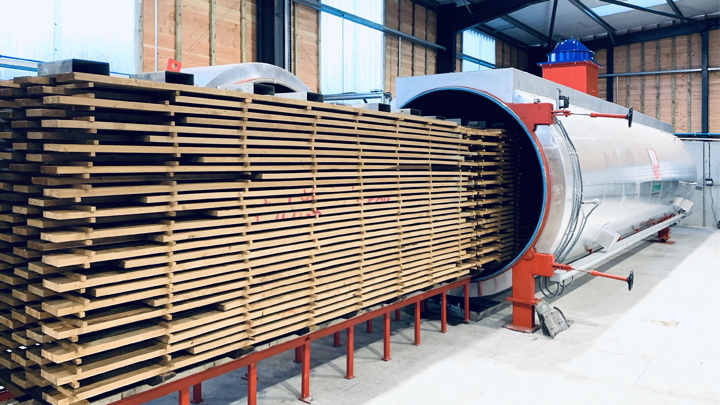
The dried timber is loaded into our on-site thermal modification unit, the first of its kind built in the UK. This is where the transformation happens.
Inside the unit, the temperature is raised to 214°C in a carefully controlled, oxygen-free environment. The absence of oxygen is critical. Without it, the timber would simply turn into charcoal. The full process takes around two and a half days.
At temperatures above 160°C, the chemical structure of the wood begins to change. It starts with a part of the cell wall called hemicellulose, essentially a mixture of different sugars. Hemicellulose is also the part of the wood that bonds most readily with water. As the temperature rises, increasing amounts of the hemicellulose are effectively cooked out of the timber.
Reducing the amount of hemicellulose in the wood has two major benefits.
Firstly, hemicellulose is a food source for wood-rotting fungi. Remove the food and the fungi struggle to survive. Without fungi, the timber does not rot in the same way. The result is wood that lasts much longer outdoors.
Secondly, hemicellulose is the part of the cell wall most responsible for absorbing and releasing moisture. Once modified, the timber absorbs and releases far less moisture from the surrounding environment.
Less moisture movement means less shrinkage and expansion. Less shrinkage and expansion means greater dimensional stability. Greater dimensional stability means a product that is far less likely to cup, split, warp or distort in service.
Brimstone ash, poplar and sycamore were independently tested at EPH Dresden in Germany — a laboratory with extensive experience of modified timber products. All three species achieved Durability Class 1, the highest durability classification available for timber.
To put that into context, thermal modification takes a tree that grew to maturity in 40 to 70 years and gives it performance characteristics comparable to timber from a 200 to 400-year-old tree. Without chemicals.
Step 3 — Cooling and conditioning
Once the modification cycle is complete, the timber is cooled gradually and carefully within the unit. Controlled cooling helps prevent stress fractures and ensures the boards remain stable and consistent in dimension.
The boards are then conditioned to a target moisture content suitable for external use before leaving the unit.
Step 4 — Milling and finishing
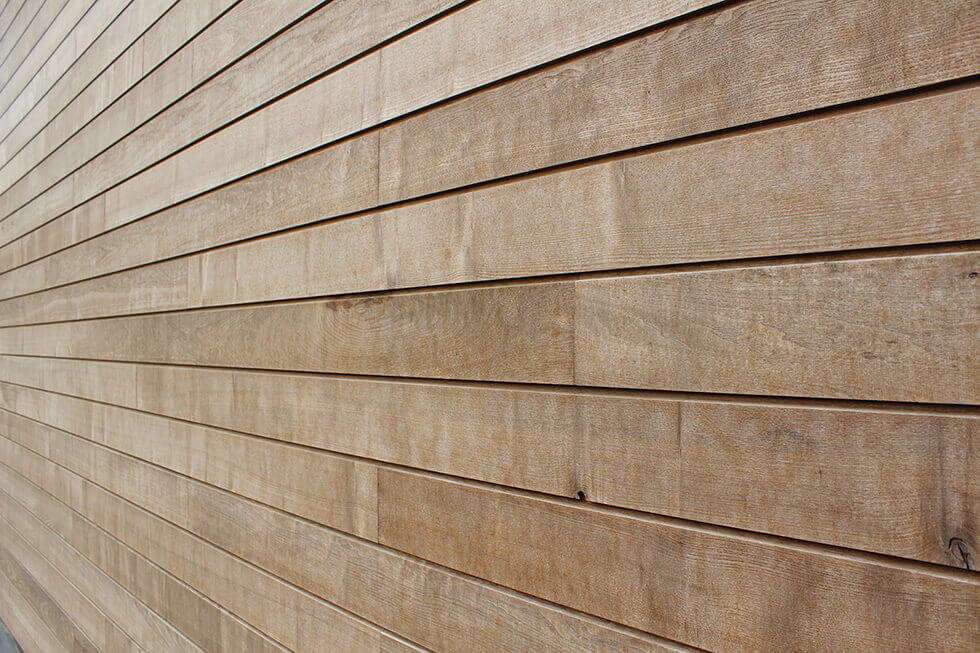
The modified boards then pass back through our sawmill for final machining. Profiles including shiplap, halflap, tongue and groove and square edge are cut to specification. Boards are graded, measured and prepared for despatch.
Everything happens between our two sites in Wiltshire.
THE RESULT
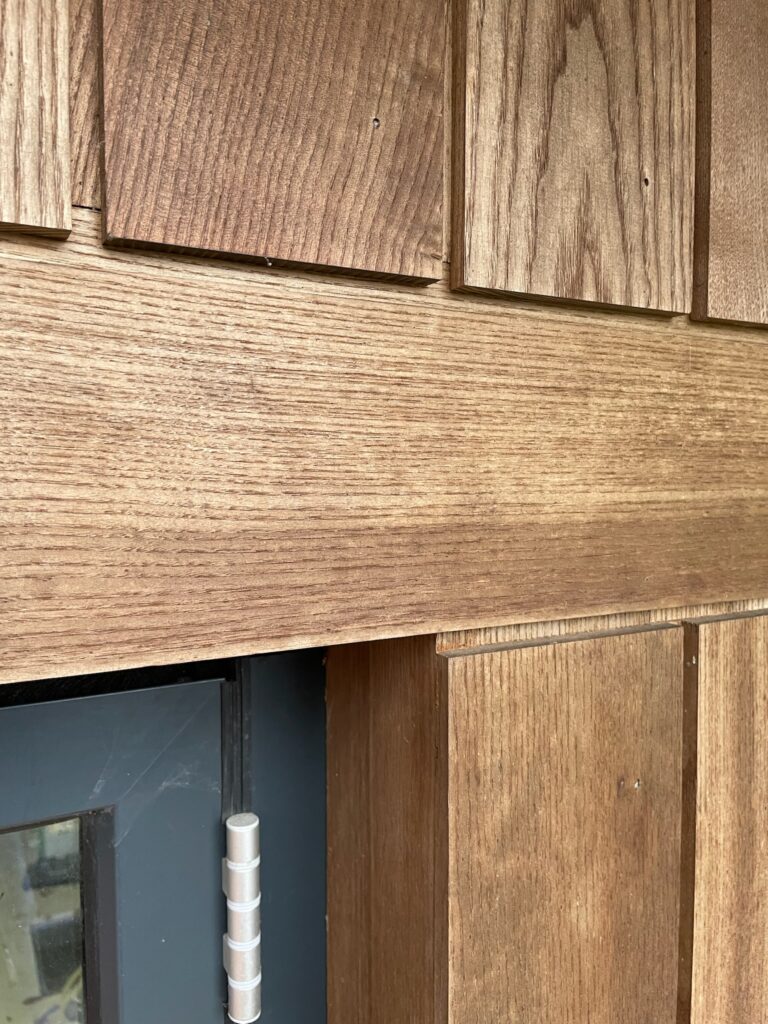
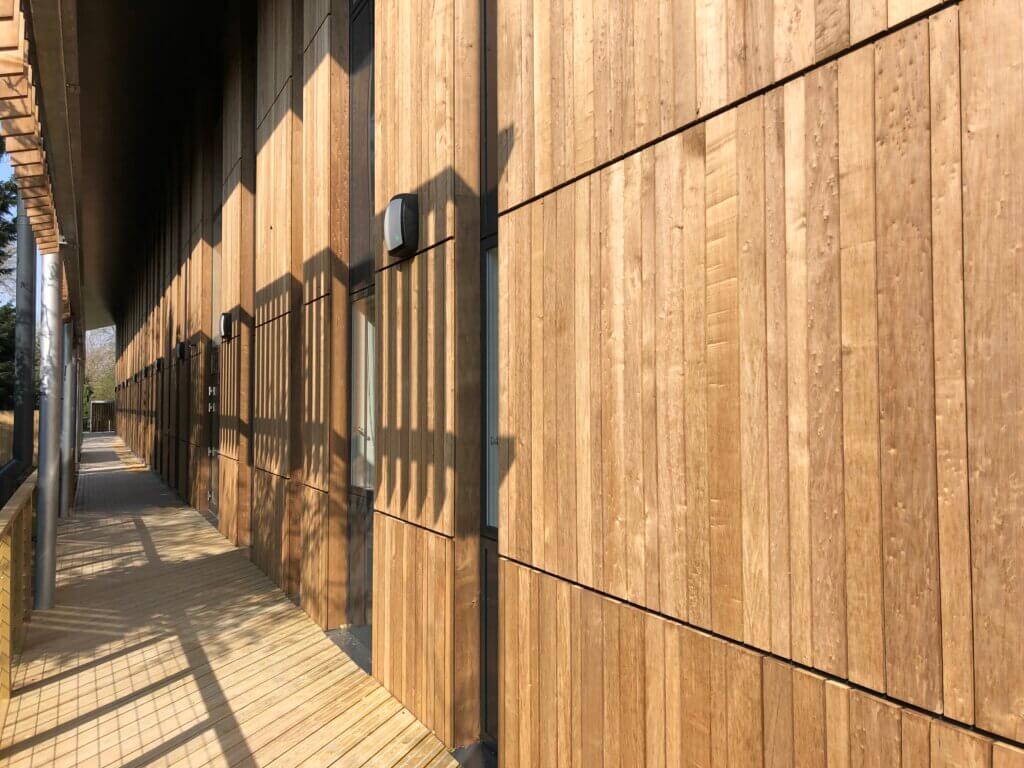
Beautiful, stable and durable timber made from British-grown trees without any added chemicals.
That matters for specifiers working on projects with strict environmental or health requirements, and for homeowners who want to know exactly what they are putting on their building.
Thermal modification is the technology behind Brimstone. It is also the reason we continue to invest in our on-site plant and R&D programme. We are wood people. Understanding how timber behaves — and how to improve it — is what we do.
If you want to know more, you can explore the full Brimstone range or read the technical specification.