
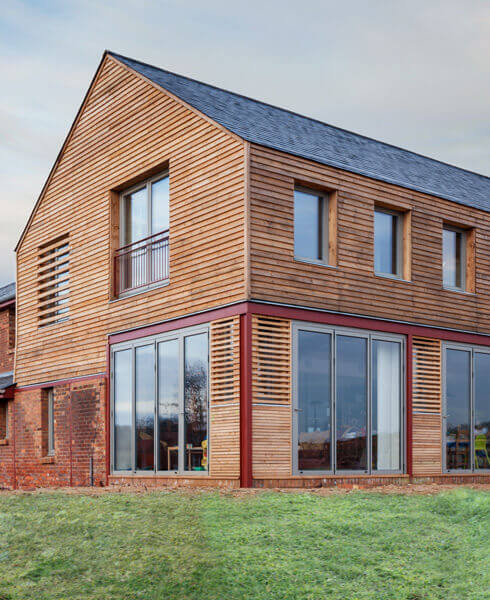
Green British Larch Cladding
Sawn from locally grown trees, larch and Douglas fir are tough and naturally durable softwoods, ideally suited to rustic barn conversions. Sold ‘green’ or freshly sawn this type of cladding is our most cost effective solution.
Style
Rustic
Profiles
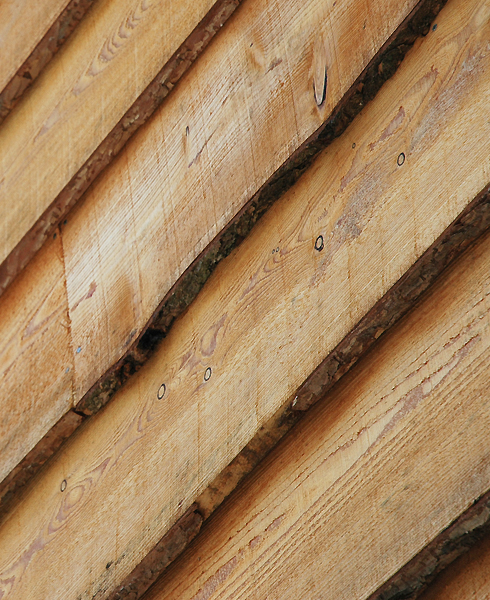
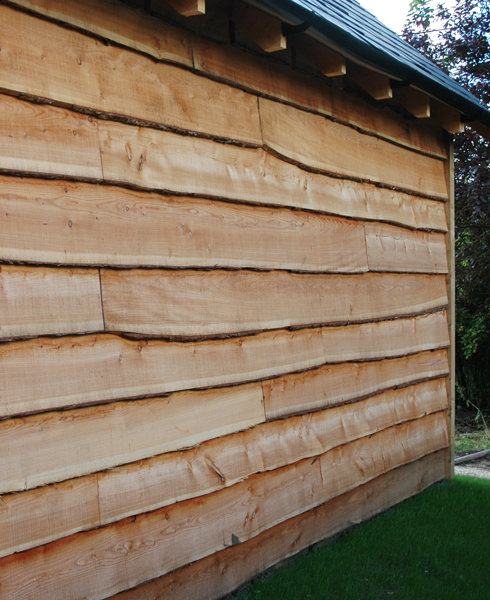
Feather-edge and waney-edge
Source
England and Wales
Beware
Shrinkage
Green British Larch Cladding
Green British Larch Cladding
Green British Larch Cladding
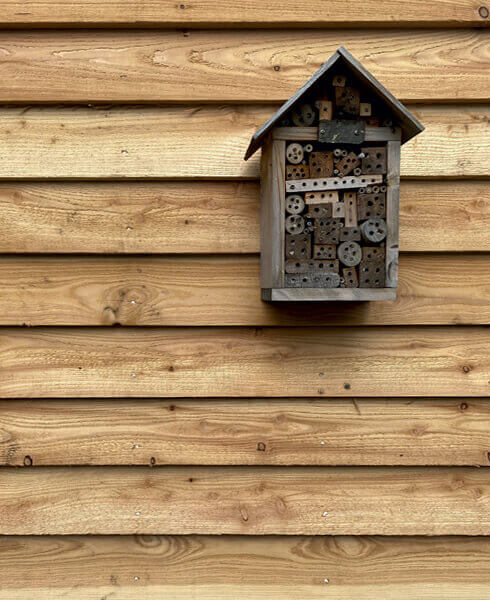
Green British Larch Cladding
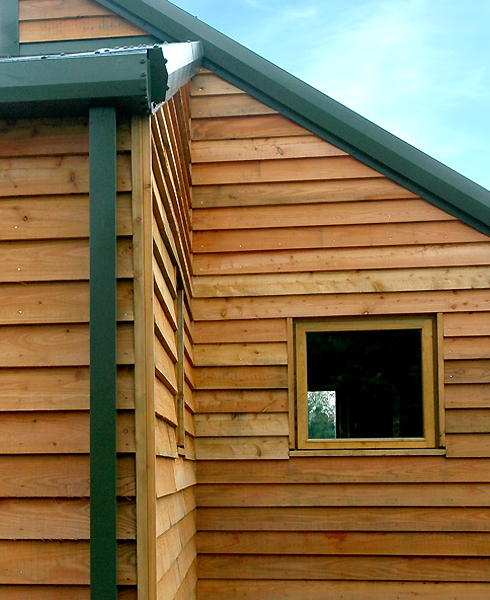
Green British Larch Cladding
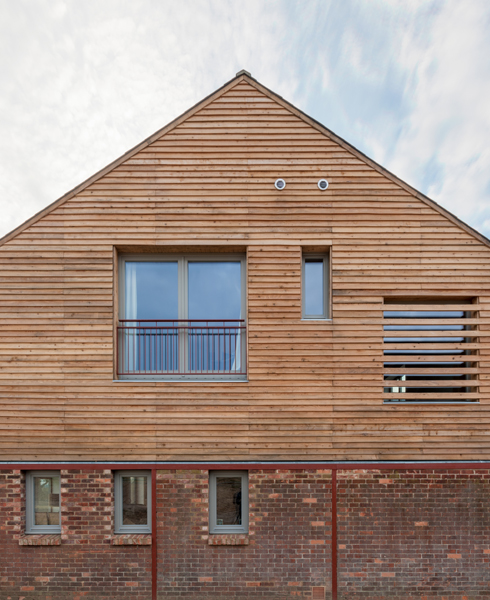
Green British Larch Cladding
Green British Larch Cladding Features
Because British larch and Douglas fir are so similar and because larch is becoming scarce, we now offer the two species as a single product. The choice of specie will be determined by our stock levels at the time of cutting although you will only receive one specie in your order. If you are adding to a previous order we will endeavour to offer the same specie.
Green larch / Douglas fir cladding is both tough and durable, making it ideal for exposed elevations and areas where knocks and scrapes are likely. Sawn straight from the log this cladding option is our simplest and cheapest.
The term ‘green ‘ means that the boards are cut directly from the tree and are not dried before delivery. Other terms used are fresh-sawn and wet. This traditional method of producing larch / Douglas fir cladding larch is well suited to sawn profiles such as feather-edge and waney-edge.
Being wet, this type of larch will shrink after installation and it is very important to follow our fixing guide to avoid problems as the boards dry.
Featheredge cladding installation guide
Waney-edge cladding installation guide
Call us to discuss your timber cladding project
Green British larch / Douglas fir Specification

Green British larch / Douglas fir cladding from Vastern Timber
- British larch / Douglas fir
- Larix decidua / Pseudotsuga menziesii
- Legal and well-managed forests in England and Wales
- Supplied by Vastern Timber (sales@vastern.co.uk)
- Grade : Grade B BS1186-3 1990 Class 3 / EN942:2007 J50
- Random lengths 1.8mt – 4.0mt+, allowing small % down to 1.5mt
- Available in feather-edge and waney-edge profiles
- Supplied green / wet
- Durability EN350-2 Moderately Durable. Class 3
- Supplied uncoated. No treatment required.
Characteristics of green British larch and Douglas fir
Appearance
British larch / Douglas fir ranges in colour from pinky-brown in the heartwood, to cream in the sap band. Boards will contain regular knots. Cladding boards may cup a little as they shrink.
Weathering
Larch / Douglas fir weathers relatively slowly, often taking two years to reach a silver-grey patina. Larch is quite consistent and is not reactive, and as such, will weather relatively evenly. Northerly elevations may weather to a darker grey than those facing South.
Desired service life
Occasionally wet 30 yrs. Frequently wet 15 yrs.
Movement class
Large
Resistance to impact
High
Working properties
Good workability. Takes fixings satisfactorily although can be prone to splitting.
Density
570 – 650 Kg / m3
Extractives
British larch contains resin rather than oil or tannin. The resin is sticky and may ooze from boards for a few years after installation. The resin is not reactive.
Installation of green British larch / Douglas fir
How to fix green larch cladding
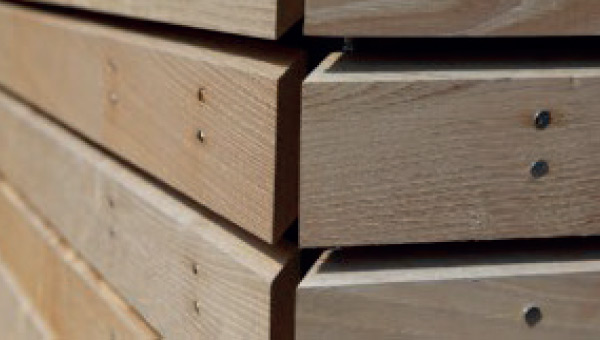
Pre-drill larch cladding and fix through the face with stainless steel ringshank nails. Because the boards will shrink considerably, do not attempt to use secret or hidden fixings. Nail guns are an option, but nail heads can be unsightly. Ensure a suitable overlap (normally 50mm) between following boards.
Recommended batten type for green larch cladding
Profiled Thermowood or treated softwood battens are recommend behind larch cladding. The minmimum thickness of primary battens should be 40mm. Horizontal battens to have angled top face to shed water.
Click to find out more about our Thermowood batten system
Batten spacing for external timber cladding
400-500 mm
Fixings for green larch cladding
Only use stainless steel fixings for external cladding
For green oak cladding we recommend 65 – 75mm stainless steel ring shank nails.
When to fix green larch cladding
Only fix green larch cladding during the autumn and winter months to avoid distortion caused by hot dry weather soon after installation.
Resistance to fixing
Medium. Pre-drilling of larch cladding boards is advisable to avoid splitting; particlularly near the ends.
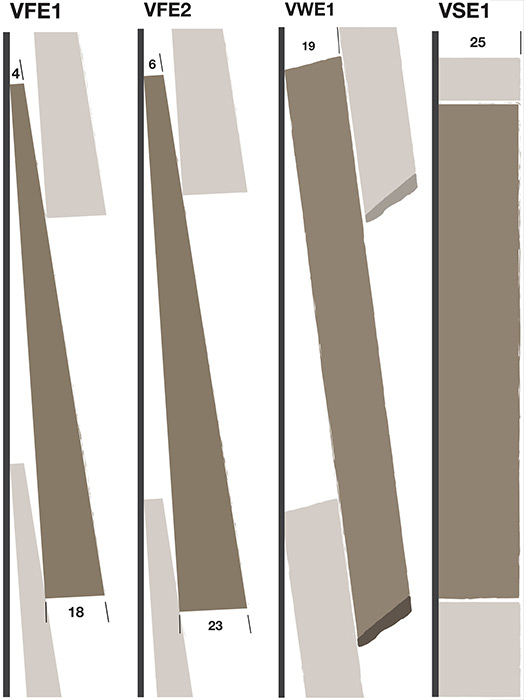
Green British larch and Douglas fir cladding profiles
We produce timber cladding to the profile of your choice. View our full range of cladding profiles
We recommend the following profiles for British larch / Douglas Fir.
Disclaimer
While the utmost care has been taken to provide accurate information, Vastern Timber shall not be held responsible for any consequences arising from any errors or omissions on this website nor for any damages resulting from the use of the information.

Contact Form
Download Guide


Sign up for our monthly newsletter of timber news, with inspiring case studies and specially selected stories from the wonderful world of trees and woodlands.
Request a quote
Request a sample
The content of this website is © Vastern Timber Limited unless otherwise stated