
Western Red Cedar: the timber built for a warming Britain
September 5, 2026
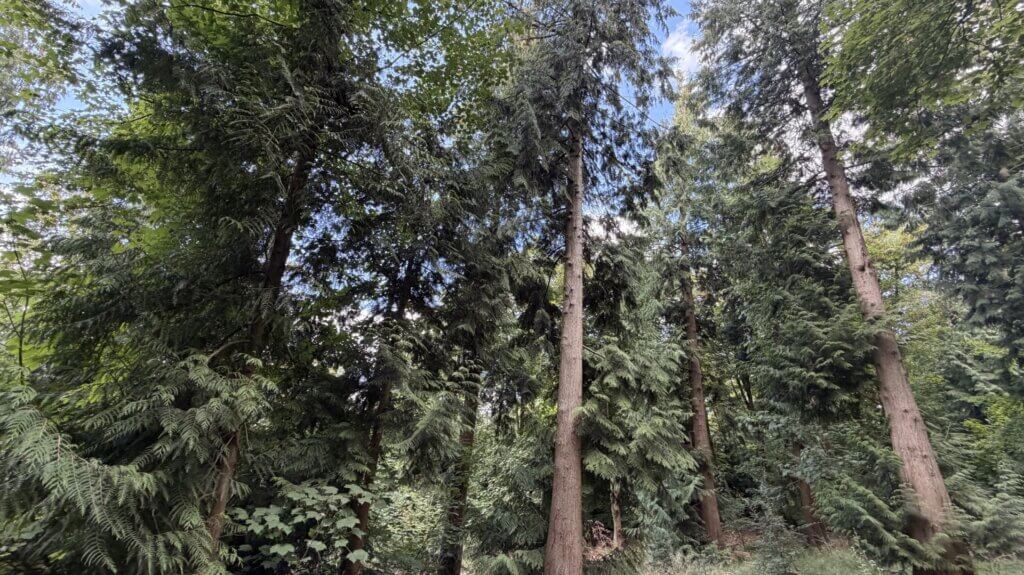
Britain is getting warmer. Our summers are getting longer and our winters milder. That changes what grows well here – and, increasingly, the timber we can grow for our homes.
Western red cedar is one of the trees well placed for that change.
For years, cedar has sat quietly in the background of British forestry: reliable, but often overlooked. Now it is attracting more attention. Forest Research, the UK’s forestry research body, has identified western red cedar as a dependable species in British trials and a strong candidate for future timber production.
So why cedar, and why now?
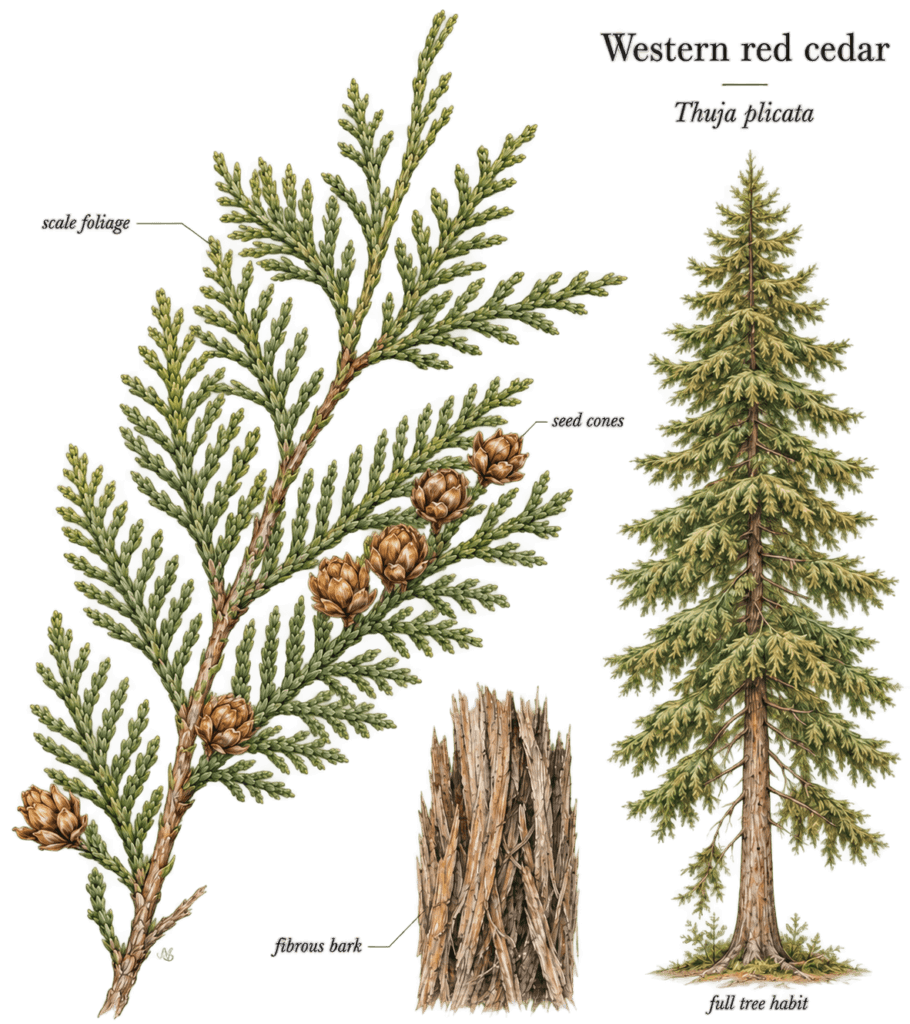
Start with the wood itself. Despite its name, western red cedar (Thuja plicata) isn’t actually a true cedar at all, but a member of the cypress family.
Its timber is naturally durable, with good resistance to rot and decay without the need for chemical treatment. This comes from naturally occurring compounds within the wood that help protect it against fungi and insects.
On the right site, western red cedar also grows quickly. In Britain it can achieve yield classes of up to 24*, which is high for a conifer. Its combination of strong growth and tall, straight stems makes it capable of producing long lengths of quality timber – ideal for products such as external cladding.
Then there is its health record. Western red cedar has performed well in British conditions and, so far, has avoided the sort of widespread disease problems that have affected some of our other important tree species. In a country dealing with the consequences of ash dieback, that resilience matters.
The climate story is a little more complicated than simply saying that cedar likes warmer weather. It likes moisture too.
In its native range in the Pacific Northwest of North America, western red cedar grows in damp forests. In Britain, it performs best on ground that retains moisture and offers some shelter. Plant it on a hot, dry, exposed site and it can struggle. Give it the right conditions and it can thrive.
This also gives western red cedar another valuable role in British forestry: it makes an excellent nurse crop. When planted alongside broadleaved trees such as oak and sweet chestnut, cedar grows quickly and encourages the broadleaves to grow taller and straighter as they compete for light. As the woodland matures, the broadleaves form the upper canopy, while western red cedar is exceptionally shade tolerant and can continue growing beneath them.
This makes cedar a useful companion species, helping foresters establish productive, diverse woodlands rather than relying on large areas of a single species. It can form part of mixed forests alongside broadleaves and other productive species such as Douglas fir and coast redwood.
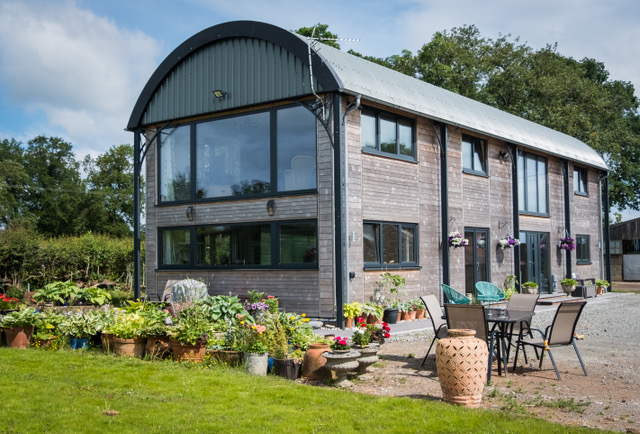
For your home, the result is something much simpler: a naturally durable timber, grown in Britain from a species that could play an increasingly important role in our future forests.
Left untreated, western red cedar weathers gradually to a soft silver-grey. Finished with an appropriate oil or coating, its warmer brown and honey tones can be retained for longer. Either way, it is a timber that can age beautifully.
There is a bigger story here too.
British commercial forestry currently depends heavily on a relatively small number of conifer species. That concentration creates risk. A serious new pest or disease affecting one of our major timber species could have significant consequences for both forests and future timber supply.
Growing a wider range of suitable species, including western red cedar, can help make our woodlands and timber supply more resilient.
So choosing British-grown western red cedar isn’t only about choosing a beautiful, naturally durable material for your project. It also supports a more diverse market for the timber coming from British woodlands.
Our climate is changing, and our forests will change with it. Western red cedar looks increasingly likely to be part of that future.
* Yield Class 24 (YC24) means that, over the productive life of the stand, the trees are capable of producing an average of approximately 24 cubic metres of timber per hectare per year.