

Putting engineered flooring to the test
November 5, 2026
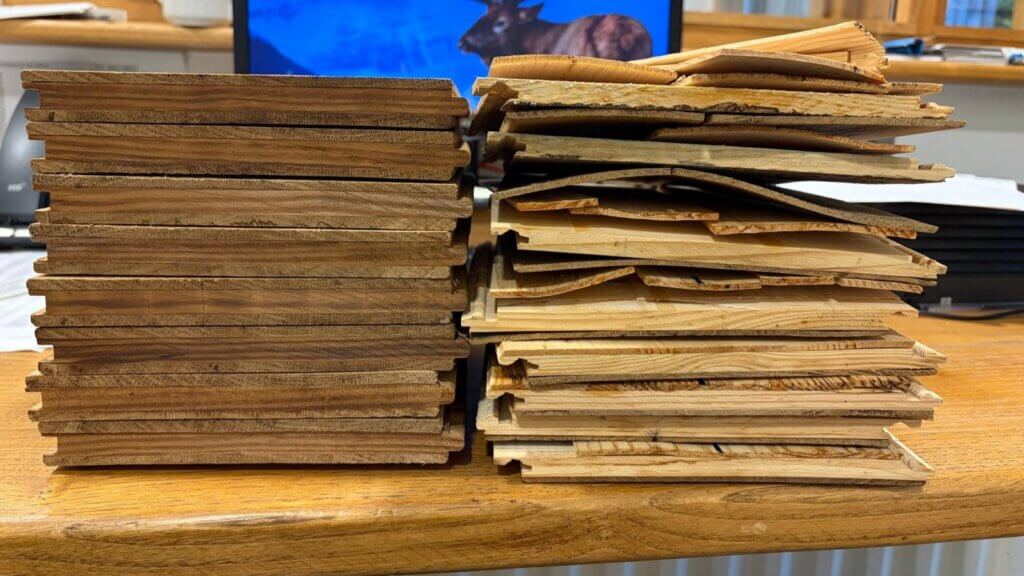
At Vastern Timber, we have introduced an in-house stress test across our engineered flooring range. This includes floors we buy from other manufacturers and our own Fyral re-engineered flooring.
The aim is simple: to find out how the floors we sell cope with moisture and heat, and how well their layers hold together when put under pressure.
We know testing to this extent is unusual, and possibly a bit nerdy, but we don’t like selling things that we don’t fully understand. Choosing a wooden floor is a significant investment, and we think it’s worth taking a closer look at how it’s made and how it will cope with unforeseen catastrophes.
Why test engineered flooring?
An engineered floor relies on the bond between its layers. The timber on the surface is what you see, but what’s underneath is arguably more important.
As wood absorbs moisture and dries out, it swells and shrinks, putting those bonds under stress. If a bond fails, the layers can start to separate. This is known as delamination.
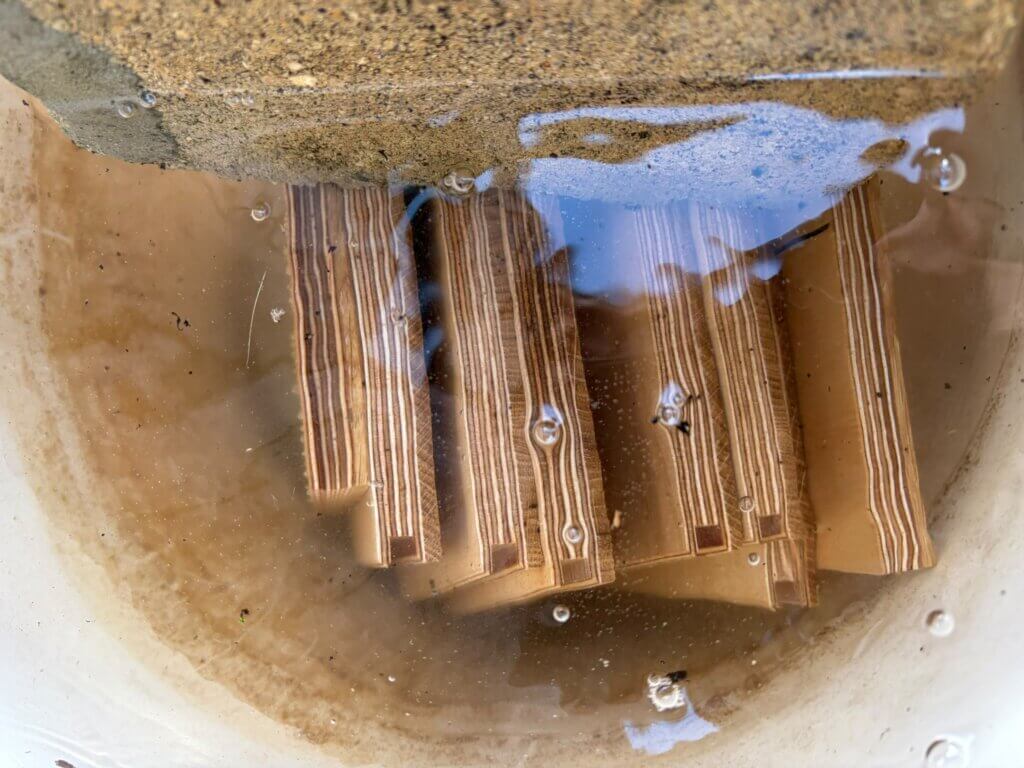
Soaking samples and then drying them aggressively helps us see how the boards respond and whether they show signs of warping, splitting or delamination.
What does our test involve?
We have developed a simple in-house procedure informed by two European standards: EN 321, which addresses moisture resistance in wood-based panels, and EN 17456, which addresses top-layer delamination in multilayer wood flooring.
The idea is to raise the moisture content of each sample, then bring it back to approximately its starting level, using an aggressive soaking and drying cycle to explore the sort of stresses a floor might face if it became saturated and then dried out.

For each flooring product, we:
- Measure and weigh eight samples.
- Submerge the samples in water for 24 hours.
- Inspect, measure and weigh them again.
- Place them in an oven at 100°C for eight hours.
- Inspect, measure and weigh them for a final time.
Following the same procedure across our range gives us a consistent way to compare how the different floors behave.
What does the test tell us?
The changes in weight tell us how much water each floor absorbs over the 24-hour soak. This helps us compare their tendency to take up water over that period; something that matters in a flood, when a floor could remain submerged for some time.
The results also let us compare the resilience of different engineered floors through the soaking and drying cycle. How much do they warp? Do they split? Do the layers stay bonded, or is there evidence of delamination?
Soaking a floor for a day and then drying it at 100°C goes well beyond normal indoor use. It is a deliberately demanding test designed to help reveal weaknesses in its construction.
This is our own adapted procedure, rather than a claim of compliance with either European standard. It doesn’t establish that a floor is waterproof, guarantee recovery after a flood or predict its lifespan. Correct installation, suitable indoor conditions and proper care still matter.
What it does give us is a better understanding of the floors we sell. Whether we make them ourselves or buy them from another manufacturer, we want to know how they will behave if the worst happens.