
How Good Detailing Shapes the Life of a Timber Project
September 30, 2026
When a timber floor cups or a cladding board rots at its end, the timber takes the blame. Look closer and the fault sits in the detail: a ventilation gap left out, a fixing that gave the wood no room to move, a cut end no one sealed. They are small things on their own, yet a project pays for them for years.
At Vastern we mill boards for cladding, flooring and decking, from British-grown timber. Working across all three, we see where projects go right and where they go wrong, always for the same reason. Every job begins with excellent timber, so what comes next is what decides its life. Fitted without a plan and full attention, even the best board fails, while the same board detailed with care, lasts a generation.

Cladding
Cladding lives outside, wet then dry, season after season, so the board that survives is the board that dries. That makes the gap behind the cladding matter more than the finish on its face. Air has to move up the cavity to let the back of each board dry after rain. Close that airflow off and moisture stays trapped in the timber, which is what rots cladding in the end, since rain rarely does the damage on its own.
The fixings carry the same weight. The right fixing lets a board expand and shrink through the seasons without splitting, while stainless steel keeps rust marks off the face. The cut ends need the same thought, because end grain draws in water faster than any other part of a board, so a sealed, well-detailed end can be the difference between a board that holds and one that fails early. Corners, window reveals and junctions show lazy detailing first, because those are the points where water tries hardest to get behind.
Species plays its part too. Brimstone Ash, Poplar & Sycamore, as well as cedar. larch oak and chestnut all grey naturally as they weather, but some weather better than others like the Brimstone rage and larch. So a wall with one section sheltered and another exposed will shift colour unevenly. Even exposure keeps the whole wall mellowing at the same rate, which is why so much of how an elevation ages can turn on a narrow ventilation gap and the choice of screw.
Flooring
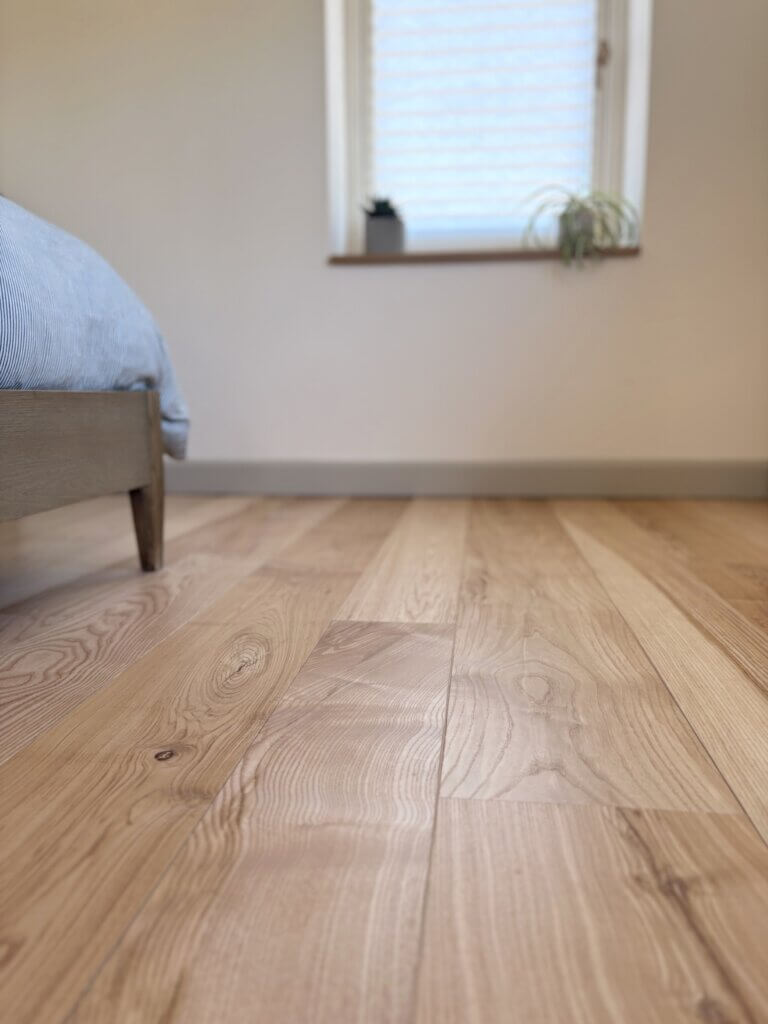
Most floor problems start before a single board is down. Timber moves with the moisture around it, so boards need time in the room to settle to its conditions before they are laid. Skip that and the floor shows it later, with gaps in winter or a slight lift in summer. The subfloor decides as much again: flat, dry and sound underneath, a floor stays flat, but rushed underneath, no quality of board will save it.
Then there is the room itself. A floor needs a small gap at its edges to expand into, hidden under the skirting, so the boards are never forced against the wall. Setting out matters too, running the boards towards the light or the length of the room and planning the layout so the floor does not finish on a thin sliver at the far wall. The choice between solid and engineered is part of this, not separate from it. Engineered oak suits ground floors, concrete and underfloor heating, as a more stable option, where solid timber prefers a first floor over joists. Settle that at the outset and the floor behaves for decades.
Decking
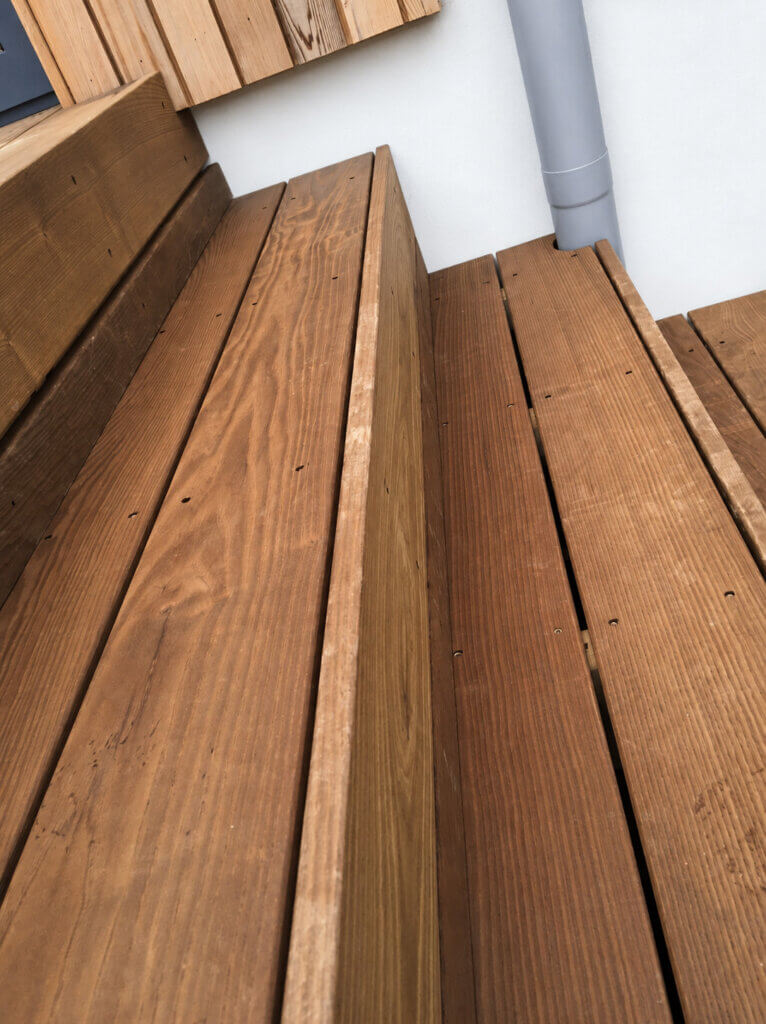
A deck is a floor that lives outdoors, so the lessons of cladding and flooring meet on one job. The deck that lasts is the one that breathes and drains. Raise it and ventilate underneath to let air dry the boards from below, because a deck that cannot dry rots where no one can see it. Set the joists at the right centres so the boards feel solid underfoot and do not flex, then leave a gap between the boards so water drops through rather than sitting on top.
The fixings and the ends need the same care they get on cladding: pre-drill near the ends so the boards do not split, space the fixings to allow movement, use stainless so the deck does not bleed rust into the timber and seal the cut ends. None of this shows in the finished deck, yet all of it decides how long the deck stays sound.
One thread runs through all three. Timber gets the credit for how a project looks, while detailing does the quiet work of keeping it that way. The species, the grade and the mill all matter. The gap, the fixing and the finish are what carry a project through its first ten winters and the many that follow. We are happy to talk the detail through before a job starts, because a detail decided early costs nothing and the wrong one costs a callback later.