
Larch Timber Cladding
We can help you select the best Larch Timber Cladding for your project
Larch Timber Cladding
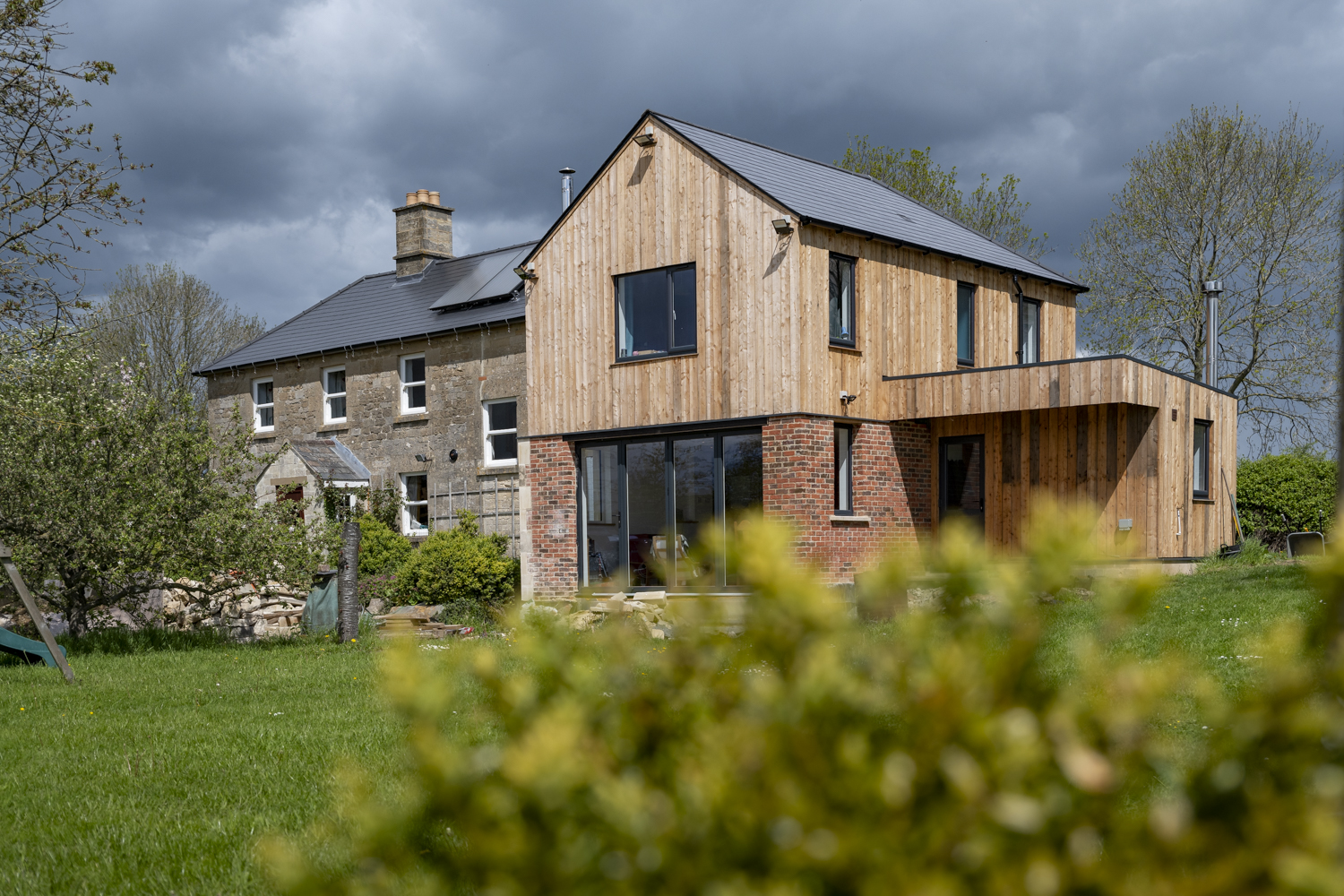
Larch cladding is an excellent choice for both traditional and modern buildings. As a naturally durable and tough option, exterior larch boards can last for well over 30 years. While Siberian larch is no longer available, Vastern Timber offers a wide range of cladding products cut from locally grown British larch. Choose from sawn and machined profiles, including feather edge, waney edge, splayed, and halflap. If you are uncertain, our team of experts is here to assist you in confidently making the right choice.
Google Reviews


Larch Cladding Features
British larch is grown in the UK and is ideal for external cladding. Larch wood is hard and naturally durable, making it a suitable choice for exposed areas or buildings requiring a tough exterior.
Larch is relatively cheap compared to cedar and hardwoods, making this a good option for smaller cladding budgets.
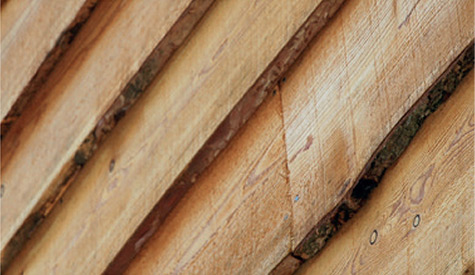
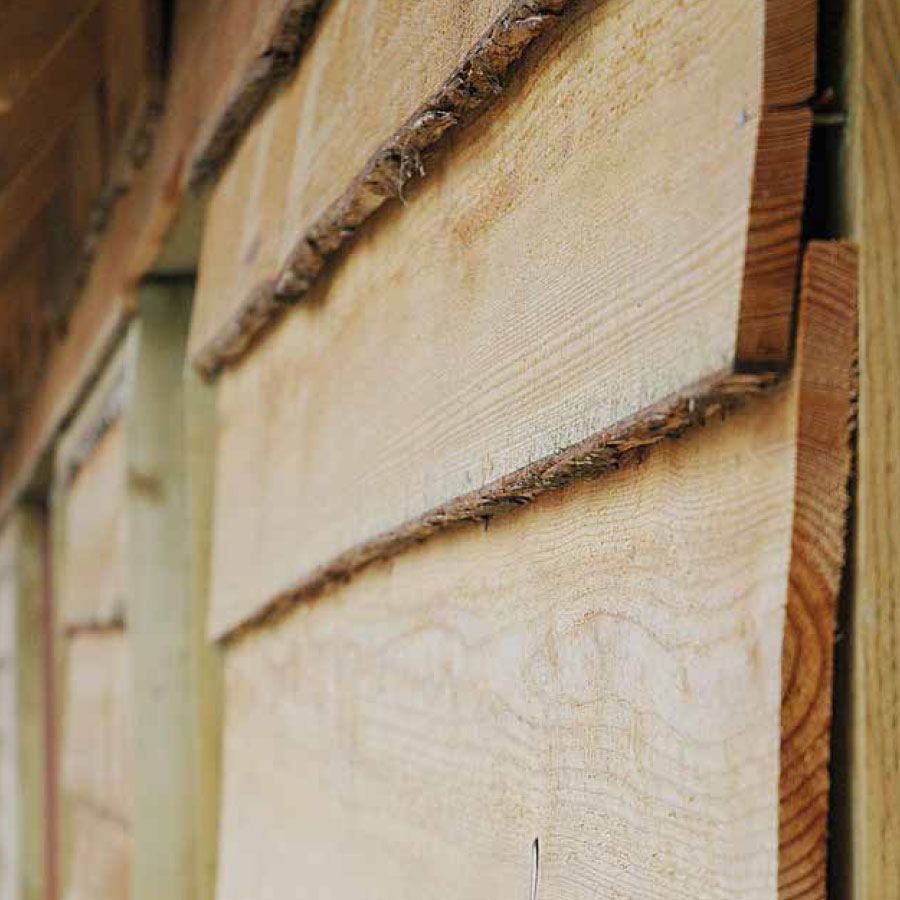
In terms of profile, larch feather edge or waney edge cladding boards are popular choices for traditional buildings and agricultural conversions, while smooth machined larch profiles such as halflap and splayed are preferred for cleaner lines on contemporary buildings.
British-grown larch is a characteristically knotty wood, but we do offer a selected A grade for those who want cleaner cladding boards with fewer knots.

Larch Wood Cladding
Suitable for external use without coatings or treatment.
Find Out More
View our case studies with larch wood cladding to help you make your decision.


Performance
Larch wood cladding is naturally durable and tough. The resins in larch protect the wood against decay, and when fitted correctly, larch boards can last for more than 30 years without any chemical treatment or coatings.
Due to its hardwearing nature, larch is ideal for locations where buildings may incur physical damage caused by weather or people. This resistance to wear and tear also makes larch suitable for exterior decking projects.
It’s important to know that larch is unstable timber; this means that larch boards will shrink and expand through the year and may also distort or cup.

It is crucial to follow our installation advice and fix the boards with room to expand. If done correctly, larch timber cladding will perform very well over time.
Like all wood species, the colour of larch will fade when exposed to the elements. Over time, weathered larch wood cladding will turn grey. Compared to other species, larch tends to weather down quite slowly, typically taking more than two years to turn completely grey.
Grades of
Larch Wood Cladding
Grade A Larch – Occasional sound knots up to 30mm. Many boards will have no knots at all.
Grade B Larch – Frequent, sound knots up to 50mm along all boards. Wet British larch used for rustic products such as waney edge and feather edge is always produced from Grade B logs and will be knotty.
Larch cladding price list
Larch Cladding
Profiles
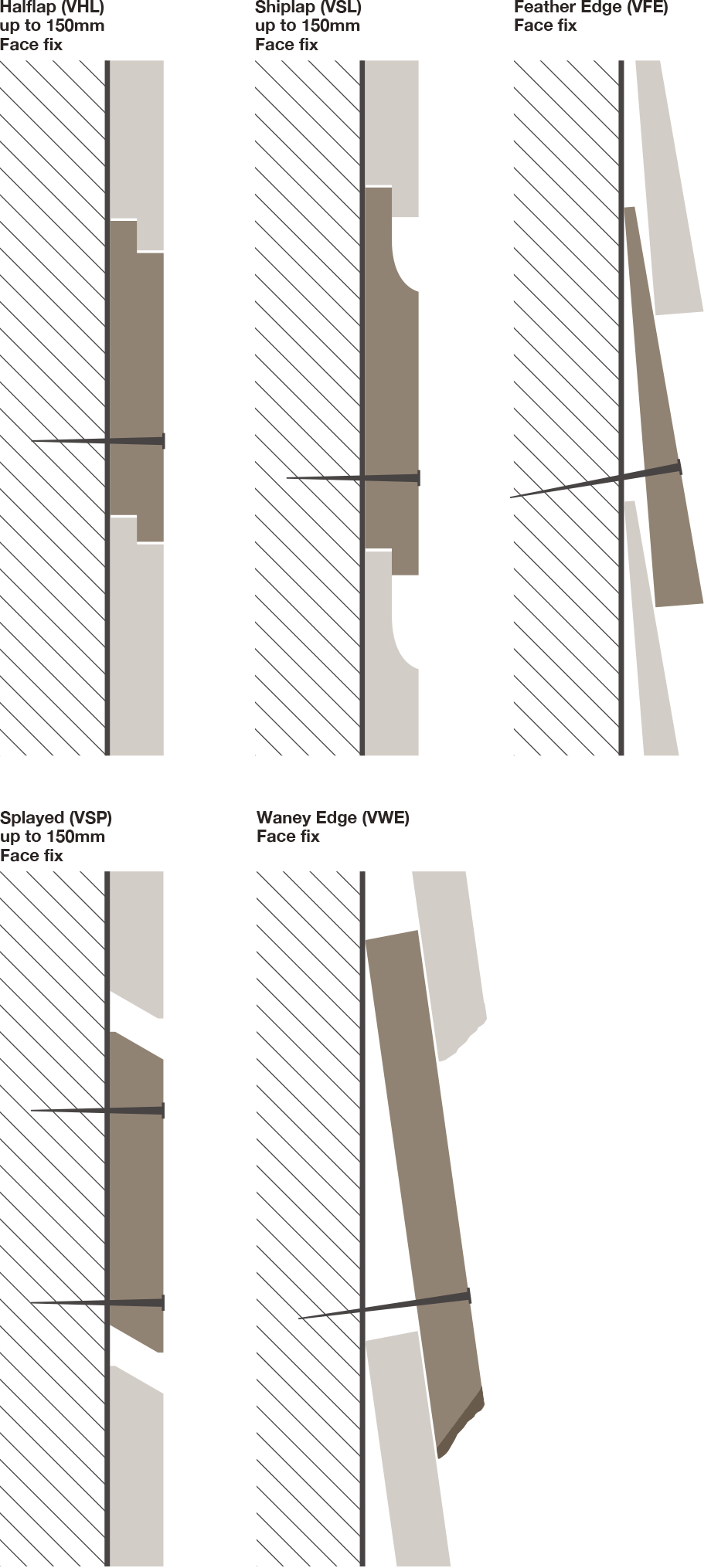
As larch is an unstable wood, we recommend simple overlapping profiles such as halflap (VHL), shiplap (VSL), and splayed (VSP) for cladding. We advise against tongue and groove (VTG) profiles for larch timber cladding and specifically against profiles that allow for secret fixing. Larch is too unstable and strong for such delicate fixing details.
For wet British larch cladding, we offer sawn cladding profiles such as waney edge (VWE), feather edge (VFE) and square edge (VSE).
View our full range of cladding profiles
Call us to discuss your cladding project
How to fix your Larch Timber Cladding
Larch boards can be installed vertically or horizontally, but you must select the appropriate profile. Vertical cladding will require a double battening system, while horizontal cladding only requires a single battening system.
As with all cladding, it’s important that you follow some basic rules. Take some time to browse through our Resource Centre for more information, or give us a call if you need further assistance.
Always fix larch cladding boards directly through the face of the cladding boards using ring shank nails or screws. Due to the instability of larch, we strongly advise against installing boards using hidden fixings.
Only use stainless steel nails or screws to fix your cladding boards to avoid staining and corrosion. Always leave an expansion gap of at least 2 mm between profiled boards.
We recommend that you do not install wet-sawn larch during the summer months, because it is likely to distort and split. Dry larch can be installed year-round, but ideally, it is better to do so during the cooler months.
Need fixings? We can supply the correct type along with your cladding boards.
Not sure if larch is for you? Have a look at our other timber cladding options.
Know what you want?
FAQs on Larch Cladding
What is the cost of larch cladding per M2?

What is the difference between British larch and Siberian larch cladding?
Is larch good for cladding an exterior wall?
What is the best profile for larch wood cladding?
What is larch weatherboard?
How durable is larch cladding?
Do I need to treat my larch cladding?
Is all larch cladding knotty?
What widths do larch boards come in?
What lengths are larch cladding boards?
Is larch feather edge good for cladding a house?
What is the best cladding for Class Q agricultural renovations?
Disclaimer
While the utmost care has been taken to provide accurate information, Vastern Timber shall not be held responsible for any consequences arising from any errors or omissions on this website nor for any damages resulting from the use of the information.

Contact Form
Download Guide
Send to my email
Send to my email
Send to my email
Send to my email
Send to my email


Sign up for our monthly newsletter of timber news, with inspiring case studies and specially selected stories from the wonderful world of trees and woodlands.
Request a quote
Request a sample
The content of this website is © Vastern Timber Limited unless otherwise stated