
What Does Woodland Management Really Mean?
(And why it matters for British timber, biodiversity and the future of our woodlands)
Walk through a British woodland and it’s easy to imagine that nature just… gets on with it. Trees grow. Branches fall. Leaves break down. Birds nest. Job done.
But healthy woodlands don’t just happen on their own. Not anymore.
Centuries of land use, fragmented habitats, imported pests and modern climate pressures mean most British woodlands need active, knowledgeable management to stay healthy, productive and resilient. And if we want a reliable supply of high-quality British timber – the kind used in products like Brimstone – good woodland management is essential.
This is an age old practice and ancient woodlands are often dated using evidence of management such as the width of coppice rings.
So, what is woodland management? And what does it look like in practice?
In this article, we will break it down.
1. Woodland management is planned, not reactive
At its core, woodland management means having a long-term plan for how a woodland will develop over decades (sometimes centuries).
A management plan sets out:
- What species are growing there
- What condition they’re in
- What the land is suited for (timber, biodiversity, recreation, shelter, or a mix)
- How the woodland will be thinned, replanted or protected
- How pests, climate impacts and invasive species will be controlled
In the UK, management plans are often 10 years long but tied into much longer cycles. Think of it as the woodland version of a business plan but on nature’s timescales.
2. It’s about shaping the woodland structure
Good woodland isn’t just lots of trees packed together. It’s a well-structured mix of:
- Canopy layer – mature trees
- Understorey – smaller trees and shrubs
- Field layer – grasses, flowers and young saplings
- Ground layer – leaf litter, fungi, soil life
This structure supports wildlife and produces better timber.
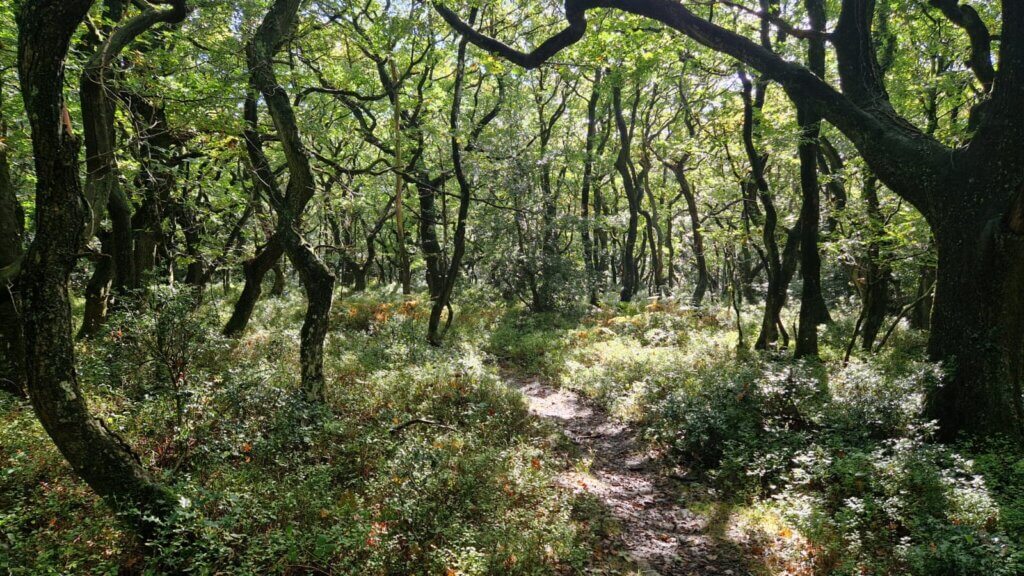
Take these two examples: Both are “woodland.” Only one is on track to produce strong, straight, valuable timber.

Well managed, 20 year old Beech, Yorkshire, GS controlled
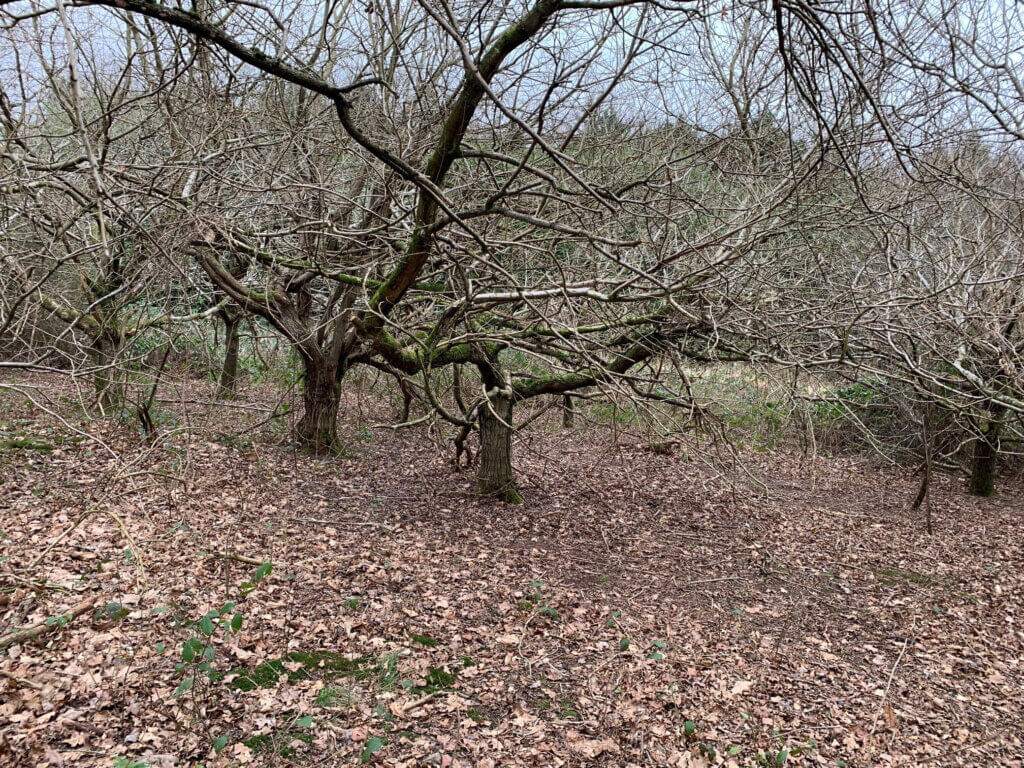
25 year old Oak, Midlands England, insufficient GS controlled
3. Thinning isn’t chopping everything down
Thinning is one of the most misunderstood parts of woodland management.
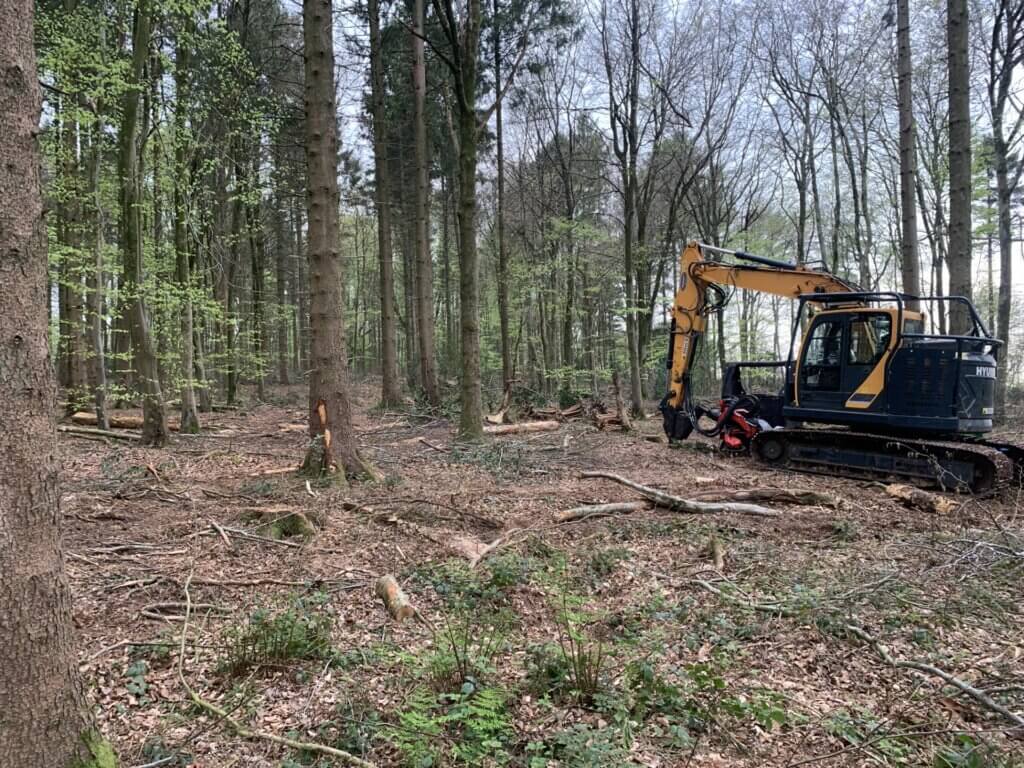
People imagine heavy machinery and bare ground. But thinning, when done well, is precise and targeted. It usually happens every 5–10 years and removes small percentages of trees to give the best individuals more light, nutrients and space. Professional foresters perform the role once taken care of by large herbivores such as Aurochs, wild horses and beavers, preventing continuous closed canopy by pushing over larger trees and grazing small sapling, thereby creating a mosaic of woodland, glades and clearings.
Think of it like weeding a vegetable patch but with 20-year timescales.
Thinning improves:
- Timber quality (fewer knots, straighter stems)
- Woodland stability (trees are less likely to blow over)
- Biodiversity (more light = more plants, insects and birds)
It’s one of the most powerful tools for healthier forests.
4. It supports wildlife rather than harms it
Good management increases biodiversity.
Why? Because unmanaged woodlands often become dark, overcrowded and low in ground-level plants. Light-starved woods support fewer insects, fewer pollinators and fewer birds.
Management techniques like:
- selective thinning
- coppicing (link to new video)
- creating glades
- leaving deadwood
- controlling deer
…all create habitats for a wider range of species.
This is why conservation organisations, from Wildlife Trusts to Forestry England, use active management, not neglect, to support nature.
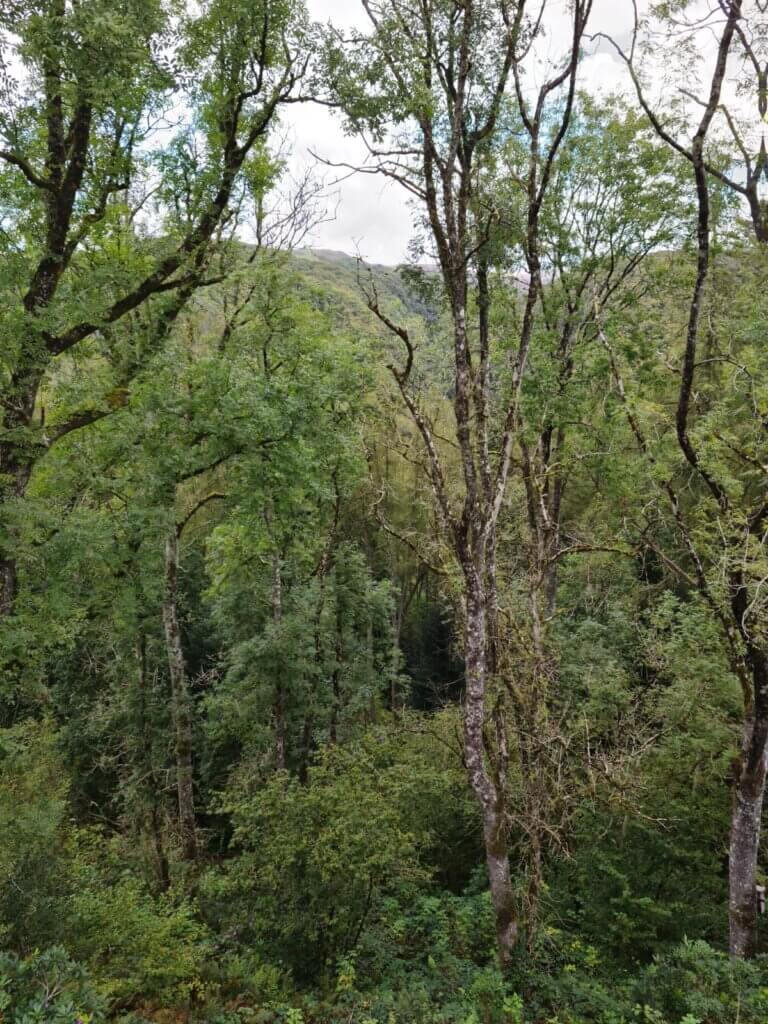
Unmanaged woodlands, Ash showing the start of ash dieback.
5. It creates resilient woodlands in a changing climate
UK woodlands face increasing risks:
- Ash dieback
- Oak processionary moth
- Phytophthora diseases
- Extreme heat and drought
- Storm damage
Managing a woodland means choosing the right mix of species, maintaining healthy spacing, and reducing competition so trees have the strength to resist these stresses.
A neglected woodland is far more vulnerable.

6. It’s essential for British-grown timber
If the UK wants to:
- reduce reliance on imported wood
- support rural jobs
- cut carbon
- build with locally sourced, low-impact materials
…then we need productive, well-managed woodlands.
High-quality timber doesn’t appear by chance. It requires decades of care:
- selecting the right species for the site
- planting at a suitable density
- early maintenance (vegetation control, guarding, weeding)
- pruning and thinning
- protecting against pests and browsing
Without this, you end up with twisted, crowded stems that can only be used for firewood.
With good management, you create future beams, cladding, flooring, joinery timber and products like Vastern’s Brimstone.
7. It balances economics and ecology
Woodland management isn’t about choosing between timber and biodiversity. The best plans support both.
Timber revenue helps fund:
- path creation
- wildlife habitat improvements
- invasive species removal
- long-term regeneration
And in turn, a healthy, biodiverse woodland produces better timber.
It’s a circular relationship one that’s central to the future of British woodlands.
So what does woodland management really mean?
In plain English:
It means giving the woodland what it needs to thrive now, and for generations to come.
A managed woodland isn’t “less natural.” It’s healthier, more resilient, more biodiverse and better able to produce strong, sustainable British timber.
At Vastern Timber, we see the impact of good (and bad) woodland management every day. The way a woodland is shaped today determines the quality of wood available 20, 40 or 80 years from now. It’s one of the reasons we champion British-grown timber and support active, thoughtful woodland stewardship across the country.
If we want thriving local woodlands and a strong future for local timber, proper management is essential.