
How to quickly (and easily) ruin your timber cladding
Imagine this.
You’ve spent weeks researching the right timber cladding. You’ve chosen the profile, the species, the finish. You wait patiently for delivery.
The installer lays everything out carefully. Each board placed exactly where it should go. The cladding goes up and it looks fantastic.
Then a few weeks later you notice it.
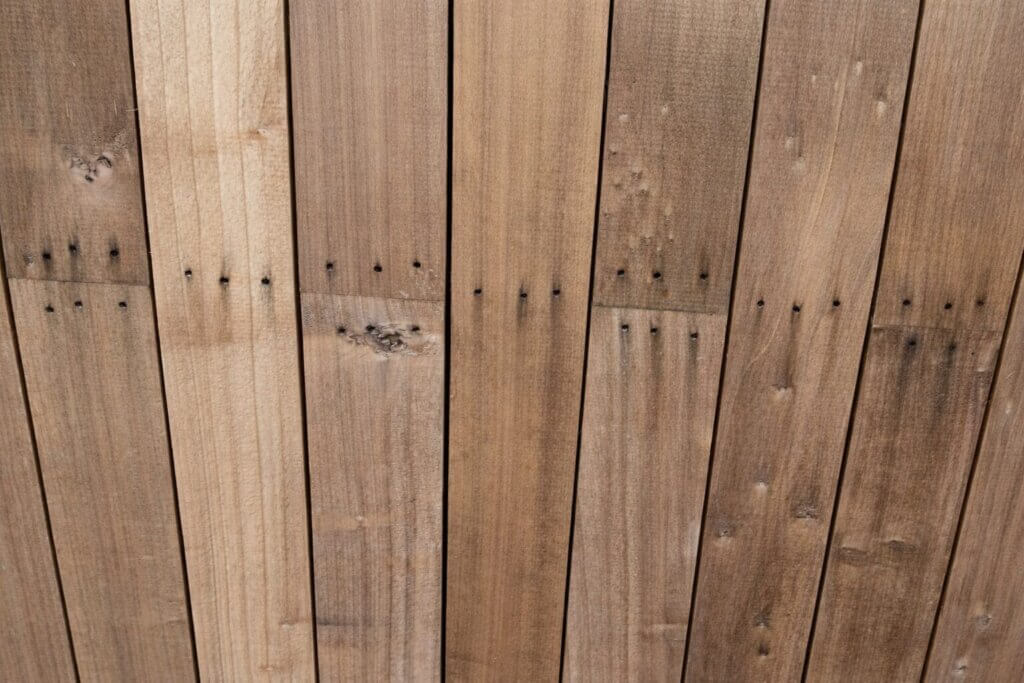
Dark streaks running down the boards. Thin lines starting from the fixings and bleeding into the timber.
That’s when the installer realises something has gone wrong.
And it nearly always comes down to one simple mistake.
They didn’t use stainless steel fixings.
Why galvanised nails ruin timber cladding
Timber cladding sits outside. It gets wet, dries out, then gets wet again.
When galvanised or plated fixings are used, the protective coating slowly breaks down. Once moisture reaches the steel beneath, corrosion begins. That corrosion reacts with natural tannins in the timber.
The result is a chemical reaction that causes dark staining to leach out across the surface of the boards.
You’ll usually see:
- Black streaks running down the cladding
- Dark halos around nails or screws
- Rust staining bleeding into the grain
- Marks that become worse after rain
It doesn’t matter how good the timber is. If the wrong fixing is used, the staining will eventually appear.
Why stainless steel fixings matter
We’re sometimes asked if galvanised fixings are “good enough”.
The short answer is no.
Exterior timber cladding should always be installed using stainless steel fixings. Stainless steel resists corrosion and doesn’t react with the tannins found in many timbers.
For most projects we recommend:
- A2 stainless steel fixings for standard exterior environments
- A4 stainless steel fixings for coastal or high-exposure locations
- Fixings designed specifically for timber cladding
They cost slightly more than galvanised nails or screws.
But compared to the cost of the cladding and installation, the difference is small – and it prevents a very expensive mistake.

Can the staining be fixed?
Once staining appears it can be difficult to completely remove.
The reaction often penetrates into the fibres of the timber rather than sitting on the surface.
There are a few things worth trying:
Replace the fixings
Remove galvanised fixings and replace them with stainless steel to stop further staining.
Clean the boards
Specialist timber cleaners designed to remove iron or tannin stains may help reduce the marks.
Allow natural weathering
Over time, weathering can soften the appearance of staining and make it less noticeable.
But there is rarely a perfect fix.
Prevention is always easier than cure.
What to check before installing cladding
A quick check before installation can save a lot of problems later.
Before fixing any boards, make sure:
- All fixings are stainless steel — not galvanised
- The correct grade is used (A2 or A4 depending on exposure)
- Fixings are suitable for the timber species being installed
- Battens, trims and accessories also use corrosion-resistant fixings
- The installer understands the cladding fixing specification
It’s a small detail.
But it makes a huge difference to how your cladding looks in five, ten, even twenty years’ time.