
The Shocking Truth About Timber
February 11, 2026
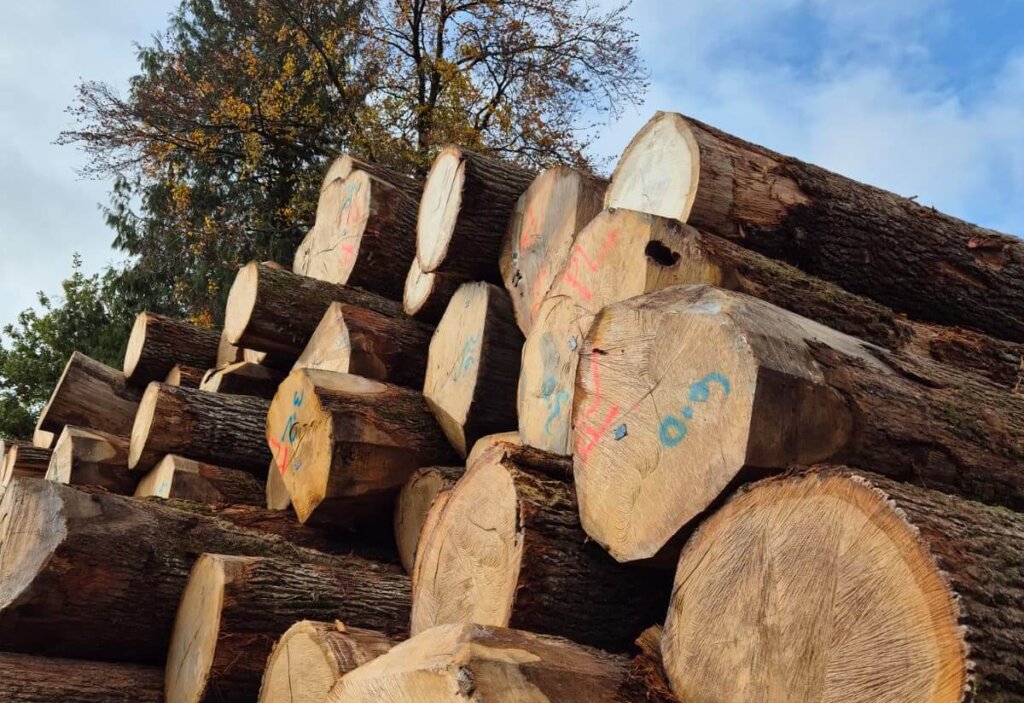
(And why 70% of every log never becomes what you think it does)
People imagine timber as simple.
You cut down a tree.
You slice it into boards.
You build something beautiful.
That story feels neat.
It’s also wildly incomplete.
The uncomfortable truth is this: around 70% of every log is lost along the way.
Not because the industry is careless.
Not because sawmills don’t try hard enough.
But because wood is a natural material, and nature doesn’t care about standard sizes, neat specifications, or what a spreadsheet wants.
Let’s talk about where that 70% actually goes.

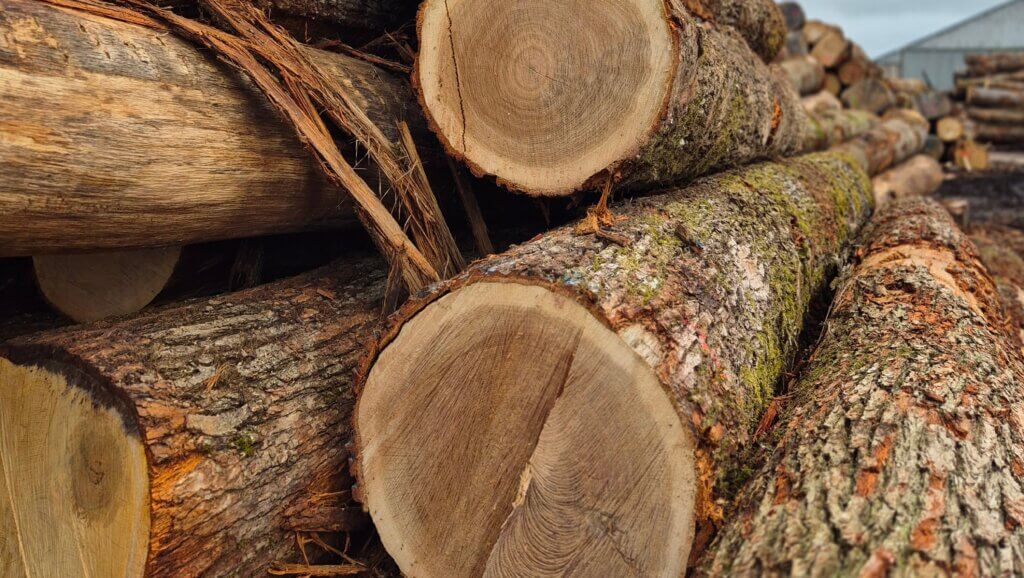
Trees aren’t straight. And they never were.
A tree grows for decades responding to wind, light, soil, pests, and gravity.
This means:
-
Tapered trunks
-
Knots where branches once were
-
Curves, bends, stresses
-
Changes in density along the length
But the market wants straight boards.
Specific widths.
Exact thicknesses.
Predictable performance.
The moment a round, irregular log meets a rectangular product list, waste is created.
Not maliciously.
Just mathematically.
Cutting a log is an exercise in compromise
When a log arrives at a sawmill, the job isn’t “cut everything into planks”.
The job is:
what can this specific log realistically become?
Every cut is a decision:
-
Cut for maximum yield, or best quality?
-
Prioritise structural strength, or visual appearance?
-
Chase a high-value product and lose volume, or the opposite?
You can’t get everything at once.
So sawmills cut around defects.
They cut out shakes and splits.
They remove sapwood when durability matters.
They sacrifice volume to create something that will actually last in a building.
Each decision makes sense on its own.
Together, they add up.

Where does the “waste” actually go?
This is where the word waste needs a reality check.
Because most of that 70% isn’t dumped in a skip.
It becomes:
-
Offcuts that can’t meet grading rules
-
Slabs from the outside of the log
-
Chips for landscaping, or fuel
-
Sawdust from every single cut
These by-products have value.
But they’re not the value people picture when they specify “solid timber”.
And they rarely carry the same financial return as the finished boards.
So yes, the tree is used.
But no, it’s not used equally.
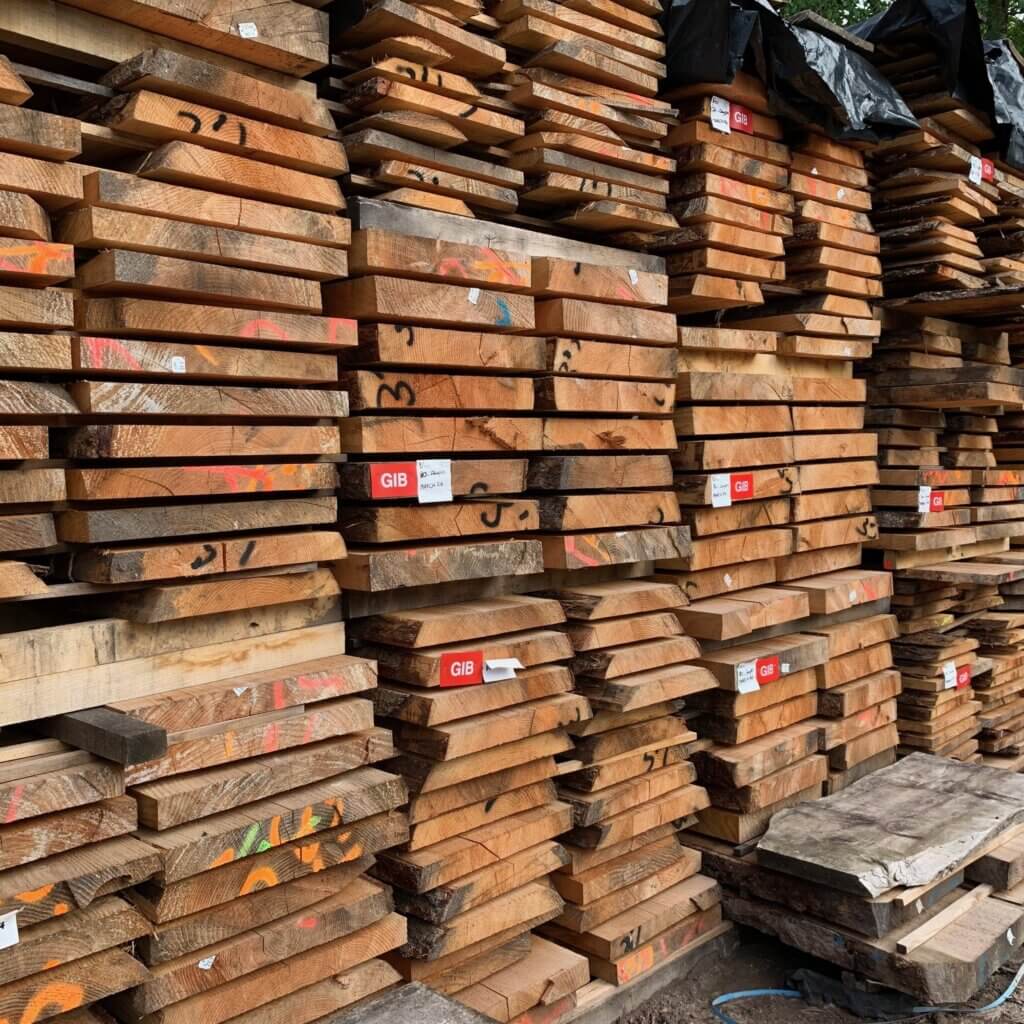
The real problem isn’t waste. It’s expectations.
The biggest disconnect in the timber industry isn’t efficiency.
It’s how far expectations have drifted from reality.
We expect:
-
Perfect boards from imperfect trees
-
Unlimited choice from finite resources
-
Imported timber prices from local woodlands
-
Consistency from a living material
Every one of those expectations quietly increases waste.
Because the more rigid the specification, the more material gets rejected along the way.

Designing with the log changes everything
Here’s the part that rarely gets talked about.
When designers, builders, and clients understand how timber actually behaves,
when they choose products based on what trees naturally give us,
waste drops dramatically.
Not through guilt.
Through alignment.
Tolerance of imperfections.
Mixed lengths and widths.
Smarter species choice.
Accepting variation as character, not failure.
This is where real sustainability lives.
Not in labels. Not in slogans.
But in decisions made before the tree is even cut.
A final thought
Trees take decades to grow.
Minutes to cut.
Hours to process.
The least we can do is respect what they are, not force them to be something they never promised to be.
The shocking truth isn’t that 70% is “wasted”.
It’s that we designed a system where that outcome feels normal.
If this made you think differently about timber, you’ll probably enjoy our newsletter.
We write about how wood really works.
What gets missed.
And how better decisions lead to better buildings.
You can sign up here.